
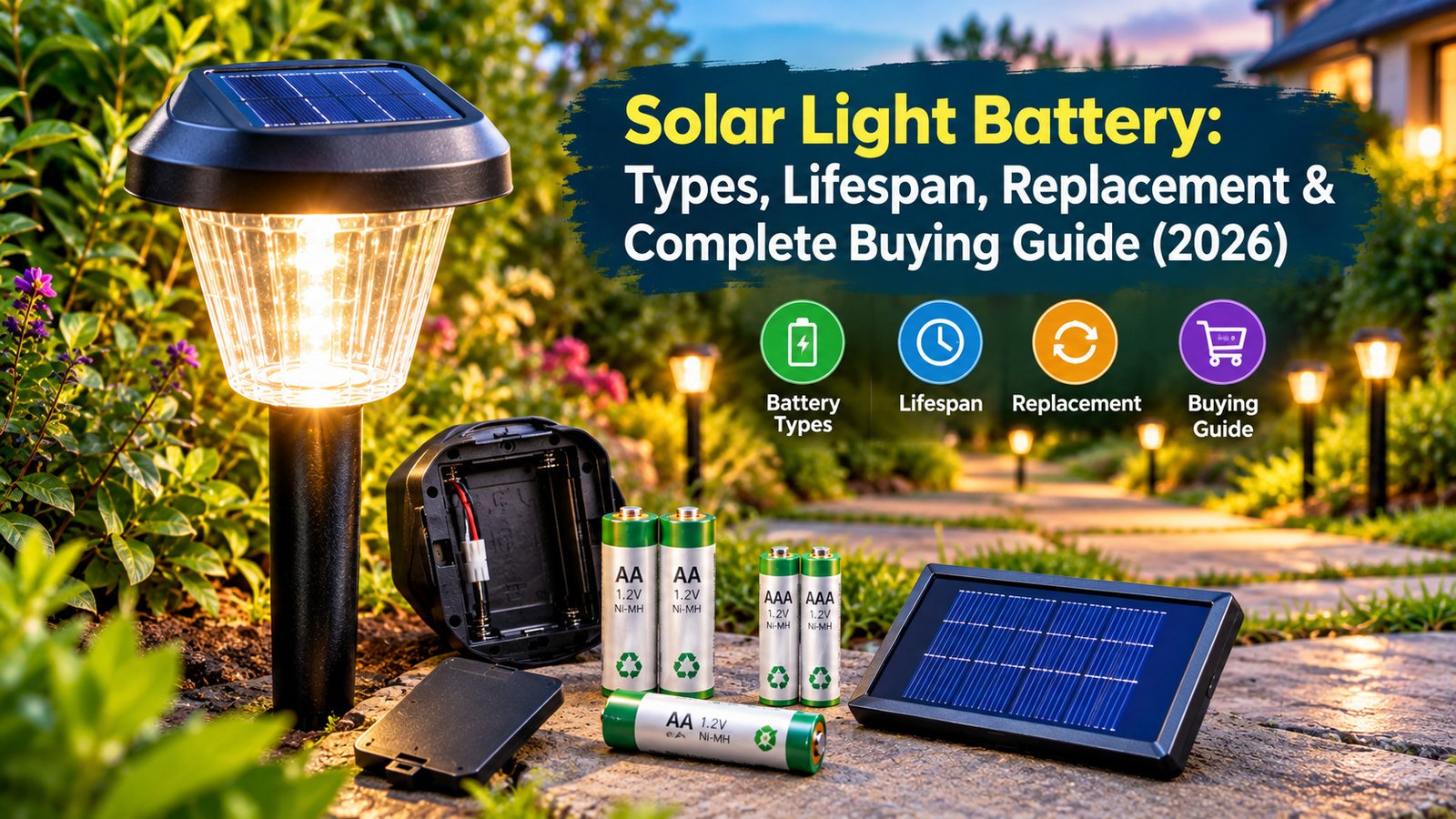
Solar lights are a simple way to illuminate your garden, driveway, pathway or outdoor space without connecting them to your home’s electricity supply. They use sunlight to charge a battery during the day and automatically turn on when it gets dark.
However, many people experience the same problem: their solar lights become dim, stop working or only stay on for a short time. In some cases, the problem is not the solar panel or the light itself. It may be the solar light battery.
Like other rechargeable batteries, solar light batteries lose capacity over time. Replacing an old battery with a compatible one can often bring a solar light back to life. But choosing the wrong battery may cause poor performance or even damage the light.
In this guide, you will learn about different solar light battery types, how long they last, how to choose the correct size, when to replace them and how to maintain them. We will also explain common problems and share practical tips for getting better performance from your solar garden lights.
Whether you have small pathway lights, decorative garden lights or outdoor security lights, this guide will help you understand what to look for when buying a replacement battery.
What Is a Solar Light Battery?
A solar light battery is a rechargeable battery that stores electricity produced by a solar panel. During daylight, the panel converts sunlight into electrical energy. The battery stores this energy and supplies power to the LED light after sunset.
Most small solar garden lights have four main components:
- Solar panel: Collects sunlight and converts it into electricity.
- Rechargeable battery: Stores the electricity generated by the solar panel.
- LED light: Produces light using the stored energy.
- Controller or circuit: Manages charging and switches the light on or off.
The battery is an important part of this system. If it becomes old or loses capacity, the light may not stay on for as long as it used to.
For example, a garden light that once stayed illuminated for eight hours might only work for one or two hours after several seasons of use. A worn battery could be the reason.
However, a weak solar panel, dirty panel surface, faulty wiring or a damaged circuit can cause similar symptoms. It is worth checking these parts before buying a replacement.
Solar Light Battery Types: Which Batteries Are Used?
Solar lights use different types of rechargeable batteries. The correct type depends on the light’s design, voltage, capacity and charging system.
The most common battery types found in solar garden lights include NiMH, NiCd and lithium-based batteries.
1. NiMH Solar Light Batteries
Nickel-metal hydride (NiMH) batteries are widely used in small solar garden lights. They are rechargeable and are often available in standard AA and AAA sizes.
Many replacement solar light batteries sold in the UK are 1.2V NiMH cells. Their capacity can vary, so always check the specification of your existing battery and the light’s manual.
Benefits of NiMH batteries:
- Rechargeable and widely available.
- Commonly sold in AA and AAA sizes.
- Suitable for many small solar garden lights.
- Generally have a higher capacity than older NiCd cells of a similar size.
- Do not contain cadmium.
NiMH batteries can be a practical replacement for compatible older solar lights. However, you should not assume that every NiMH battery will work in every light. Check the voltage, dimensions and manufacturer’s instructions first.
2. NiCd Solar Light Batteries
Nickel-cadmium (NiCd) batteries were commonly used in older solar lights. They are rechargeable and can tolerate a range of operating conditions, but they contain cadmium, a toxic heavy metal.
NiCd batteries may still be found in older garden lights, although many replacement options now use NiMH technology.
Benefits of NiCd batteries:
- Rechargeable.
- Often found in older solar lighting systems.
- Can perform reliably in devices designed for them.
Disadvantages:
- Contain toxic cadmium.
- Have lower energy capacity than many modern alternatives.
- Must be disposed of through appropriate battery recycling facilities.
If your old solar light uses a NiCd battery, check the manufacturer’s instructions before replacing it with NiMH. Some lights support the change, but compatibility is not guaranteed.
3. Lithium-Ion Solar Light Batteries
Some modern solar lights use lithium-ion batteries. These batteries can store a relatively large amount of energy for their size and are common in certain higher-powered solar lighting products.
Lithium-ion batteries are not always interchangeable with AA or AAA NiMH cells. They may have different voltage requirements and need a compatible charging circuit.
Benefits of lithium-ion batteries:
- High energy capacity for their size.
- Useful in some compact, brighter solar lights.
- Available in different shapes and capacities.
Disadvantages:
- Require a suitable charging and protection system.
- Not a direct replacement for standard 1.2V NiMH batteries.
- Must be handled and recycled correctly.
Never replace a NiMH or NiCd battery with a lithium-ion battery just because it physically fits. The light must be designed for that battery chemistry.
4. LiFePO4 Solar Light Batteries
Lithium iron phosphate (LiFePO4) is another rechargeable lithium battery chemistry. It is used in some solar lighting systems and larger energy storage products.
LiFePO4 batteries can offer a long cycle life when used within their specified operating conditions. However, they require a compatible charging system and are not suitable as a universal replacement for small solar light batteries.
Before purchasing one, check the product manual for the required chemistry, voltage and battery dimensions.
Solar Light Battery Types Compared
| Battery type | Common use | Main advantage | Important consideration |
|---|---|---|---|
| NiMH | Small garden and pathway lights | Widely available and rechargeable | Match voltage and capacity |
| NiCd | Older solar lights | Suitable for compatible older systems | Contains cadmium |
| Lithium-ion | Some modern solar lights | High energy capacity | Needs compatible charging electronics |
| LiFePO4 | Selected solar lighting systems | Long cycle life in suitable conditions | Not a universal replacement |
For many small solar garden lights, NiMH is a common replacement option. The correct choice, however, is always the one specified for your particular light.
Best Battery for Solar Lights: What Should You Choose?
The best battery for solar lights depends on the model and the conditions in which you use it. A battery that works well in one light may not be suitable for another.
For small garden lights that originally use 1.2V AA NiMH cells, a compatible rechargeable NiMH battery is often a straightforward option.
When comparing batteries, consider these factors:
1. Battery chemistry
Check whether your light requires NiMH, NiCd, lithium-ion or another type. Do not choose a replacement based only on its appearance.
2. Voltage
Voltage must match the light’s requirements. Many small solar lights use 1.2V rechargeable cells, but some use different configurations.
3. Capacity
Battery capacity is usually shown in milliamp-hours (mAh). A higher capacity can store more energy, but only if the solar light’s charging system supports it.
4. Physical size
The replacement must fit securely inside the battery compartment. Check whether your light uses AA, AAA or a specialist battery.
5. Quality and reliability
Choose a battery from a reputable supplier. Check the product specifications and make sure it is intended for rechargeable use in a compatible device.
You can compare replacement options at Battery Station’s solar and garden light battery collection.
AA Solar Light Battery: What You Need to Know
AA batteries are commonly used in many small solar garden lights. They are larger than AAA batteries and can often hold more energy, although the actual capacity depends on the battery model.
A typical small solar light may use a 1.2V AA NiMH battery. Some models use one cell, while others use multiple batteries.
Before buying an AA solar light battery, check:
- The voltage printed on the old battery.
- Whether the old battery is NiMH or NiCd.
- The battery capacity in mAh.
- The positive and negative terminal positions.
- The available space in the battery compartment.
Do not assume that all AA batteries are rechargeable. Ordinary alkaline AA batteries are generally not designed for repeated charging and should not be used in a solar light’s rechargeable battery slot.
AAA Solar Light Battery: Is It Different from AA?
AAA batteries are smaller than AA batteries. Some compact solar lights use AAA cells because they take up less space.
The main difference is their physical size and the capacity available in a particular model. A smaller battery may store less energy, but performance also depends on the solar panel, LED and control circuit.
If your solar light uses an AAA battery, do not replace it with an AA cell unless the manufacturer specifically supports that configuration. Even if an adapter makes it fit, the battery may not be compatible with the device.
Always check the battery compartment and the product manual before purchasing.
Solar Light Battery Size: How to Find the Correct One
Choosing the correct battery size is one of the most important steps when replacing a solar light battery.
A battery may look similar to your old one but have a different voltage, chemistry or capacity. These differences can affect performance and safety.
Follow these steps to identify the right battery:
- Switch off the solar light. If it has an off switch, turn it off before opening the battery compartment.
- Open the battery cover. Check the product manual if you are unsure how to open it.
- Remove the old battery. Note how it is positioned.
- Read the label. Look for the voltage, battery chemistry, size and capacity.
- Check the manual. Confirm which replacement battery types the manufacturer allows.
- Compare the specifications. Make sure the new battery matches the required chemistry, voltage and size.
If the old battery label is missing or damaged, look for the model number of the solar light and check the manufacturer’s website.
When in doubt, contact the manufacturer or a qualified supplier rather than guessing.
How Long Do Solar Light Batteries Last?
The lifespan of a solar light battery depends on its chemistry, quality, charging conditions, temperature and how often it is used.
Many small rechargeable batteries last around one to three years in everyday garden lighting, but this is only a general guide. Some batteries may need replacing sooner, while others can last longer.
Battery lifespan is affected by several factors.
Charging and Discharging
Solar lights usually charge during the day and discharge at night. This repeated process is called a charge cycle.
Over time, rechargeable batteries lose some of their ability to store energy. As capacity decreases, the light may become dimmer or switch off earlier than it used to.
Sunlight Exposure
A solar panel needs enough sunlight to recharge the battery. If the panel is shaded by trees, walls or buildings, the battery may not receive a full charge.
During winter in the UK, shorter daylight hours and cloudy weather can also reduce charging time. This can make a healthy battery appear weak.
Temperature
Very high or very low temperatures can affect battery performance and lifespan. Cold weather can temporarily reduce the amount of energy a battery can deliver.
Follow the manufacturer’s temperature recommendations, particularly if the light is installed in an exposed location.
Battery Quality
Battery quality can vary between products. A suitable battery from a reputable supplier may provide more reliable performance than an unknown product with unclear specifications.
Solar Light Design
The solar panel size, LED brightness and control circuit also affect how long a light stays on. A bright light may use more energy than a small decorative light.
This means battery lifespan alone cannot guarantee a particular number of hours of illumination each night.
Signs Your Solar Light Battery Needs Replacing
If your solar lights are no longer working properly, the battery may be reaching the end of its useful life.
Look for these common signs:
1. The light turns off too early
If the light used to stay on for most of the night but now switches off after a short time, the battery may have lost capacity.
2. The light is dim
A weak battery may not provide enough stored energy for the light to operate as expected. However, a dirty solar panel or damaged LED can also cause dim lighting.
3. The light does not work even after a sunny day
If the solar panel receives good sunlight but the light still does not turn on, the battery may be faulty. Check the switch, panel and wiring as well.
4. The light works inconsistently
A light that works on some nights but not others may have a weak battery or an issue with charging.
5. The battery is visibly damaged
If a battery is leaking, swollen, corroded or unusually hot, stop using it. Do not attempt to recharge a damaged battery. Follow local battery recycling guidance.
These signs can help you decide whether to test or replace the battery, but they do not prove that the battery is the only problem.
Solar Light Battery Replacement: Step-by-Step Guide
Replacing a solar light battery is often a simple task, provided the battery is designed to be user-replaceable.
Before starting, check the product instructions. Some solar lights have sealed battery compartments and should not be opened by the user.
Step 1: Turn Off the Solar Light
If your light has an on/off switch, turn it off. This can help prevent the light from switching on while you are working.
Step 2: Open the Battery Compartment
Look for screws, clips or a removable cover. Use the correct screwdriver if necessary, and avoid forcing the cover.
Step 3: Remove the Old Battery
Carefully remove the old battery. Take note of the positive (+) and negative (−) positions.
If you notice leakage or corrosion, avoid touching the material directly. Follow the manufacturer’s safety instructions.
Step 4: Check the Replacement Battery
Compare the new battery with the old one. Confirm that the chemistry, voltage and size are compatible with the solar light.
Do not use a standard non-rechargeable alkaline battery in a compartment designed for rechargeable cells.
Step 5: Insert the New Battery
Place the new battery into the compartment, matching the positive and negative markings.
Make sure it fits correctly and that the contacts are clean and secure.
Step 6: Close the Compartment
Replace the cover and tighten any screws gently. Make sure the seal is correctly positioned if the light is designed to be weather-resistant.
Step 7: Allow the Battery to Charge
Place the solar light where its panel can receive direct sunlight. Follow the manufacturer’s charging instructions.
Some lights may need a full day of sunlight before you can judge their performance.
Step 8: Test the Light
Cover the solar panel or test the light in darkness, following the product instructions. If it still does not work, check the switch, panel, wiring and battery compatibility.
If the light remains faulty, the problem may be with another component.
Solar Light Battery Not Charging: Common Causes and Fixes
A solar light battery may fail to charge for several reasons. Replacing the battery immediately is not always necessary.
Here are some common causes and simple checks.
Dirty Solar Panel
Dust, dirt, bird droppings and other debris can block sunlight from reaching the panel.
What to do: Gently clean the panel with a soft damp cloth. Avoid abrasive materials that could scratch the surface.
Insufficient Sunlight
Solar panels need sunlight to generate electricity. A panel placed under a tree, roof or deep shade may not receive enough light.
What to do: Move the light to a sunnier location if possible. Check whether nearby plants or objects have started blocking the panel.
The Light Is Switched Off
Some solar lights have a manual switch. If it is off, the light may not operate as expected.
What to do: Check the switch and consult the user manual.
Old or Worn-Out Battery
A battery that has lost capacity may no longer store enough energy to keep the light running.
What to do: Check the battery label and replace it only with a compatible rechargeable battery.
Damaged Wiring or Battery Contacts
Loose connections, corrosion or damaged wires can interrupt charging or prevent the light from turning on.
What to do: Inspect the compartment visually. If you find damaged wiring or the light is sealed, follow the manufacturer’s repair guidance rather than attempting an unsafe repair.
Winter Weather
Short daylight hours and cloudy conditions can reduce the amount of energy collected by the solar panel.
What to do: Keep the panel clean and position it to receive as much sunlight as possible. A shorter lighting period during winter does not automatically mean the battery is faulty.
How Much Does a Solar Light Battery Cost in the UK?
The price of a replacement solar light battery depends on its size, chemistry, capacity, brand and pack quantity.
Small AA and AAA rechargeable cells are often relatively inexpensive. Specialist lithium batteries or batteries for larger solar lighting systems may cost more.
Prices can change, so check the retailer’s current listing before purchasing.
When comparing prices, consider more than the cost of one battery. Check the following:
- Is the battery rechargeable?
- Does it match your solar light’s specifications?
- Is it sold individually or in a pack?
- Are delivery charges included?
- Does the seller provide clear product information?
You can browse current options from Battery Station. For broader information about solar batteries and components, see Infinite Solar’s battery section.
How to Make Solar Light Batteries Last Longer
Good maintenance can help your solar lights perform more reliably and may reduce the need for early battery replacement.
Keep the Solar Panel Clean
Clean the panel occasionally to remove dirt and dust. A clean surface helps sunlight reach the solar cells.
Place the Light in a Sunny Location
Whenever possible, position the solar panel where it receives several hours of direct sunlight. Avoid placing it in permanent shade.
Check the Battery Compartment
Inspect the battery compartment periodically for moisture, corrosion or loose contacts. Make sure the cover is properly closed after maintenance.
Use the Correct Battery
Always use the battery type recommended by the manufacturer. An incompatible battery may charge poorly or damage the light.
Store Lights Correctly
If you remove solar lights for long-term storage, follow the manufacturer’s instructions. Some rechargeable batteries should not be left completely discharged for extended periods.
Avoid Unnecessary Battery Changes
If the light is working normally, there is usually no need to replace the battery. Replace it when performance declines or the manufacturer recommends doing so.
Solar Light Batteries in Winter: What Should You Expect?
Solar lights can work during winter, but their performance may change because daylight hours are shorter and sunlight is often weaker.
A solar panel may collect less energy on cloudy days, leaving less electricity available for nighttime lighting. Cold temperatures can also affect battery performance.
You may notice that your lights turn on later, become dimmer or switch off earlier during winter. This does not always mean the battery needs replacing.
To improve winter performance:
- Keep the solar panel clean.
- Position the panel to receive as much sunlight as possible.
- Remove snow or heavy debris from the panel when safe.
- Check that nearby plants are not creating extra shade.
- Make sure the battery is compatible and in good condition.
If the light performs poorly even after several sunny days, inspect the battery and other components.
Common Mistakes to Avoid When Buying Solar Light Batteries
Choosing a replacement battery is straightforward when you know what to check. However, a few common mistakes can lead to poor performance.
Buying a non-rechargeable battery: Solar lights are designed to charge their batteries repeatedly. Do not use ordinary alkaline batteries unless the manufacturer specifically says they are suitable.
Choosing the wrong voltage: A battery with the wrong voltage may not work correctly and could damage the lighting circuit.
Ignoring battery chemistry: NiMH, NiCd and lithium batteries have different charging requirements. They are not automatically interchangeable.
Focusing only on mAh: A higher capacity does not guarantee better performance if the solar light cannot charge that battery properly.
Assuming every AA battery is the same: Battery size alone does not tell you whether a battery is compatible.
Replacing the battery without checking the panel: A dirty or shaded solar panel may be the real reason your light is not working.
Taking a few minutes to check the specifications can help you avoid unnecessary purchases.
Frequently Asked Questions About Solar Light Batteries
1. Can I use rechargeable AA batteries in solar lights?
Yes, if your solar light is designed for AA rechargeable batteries and the replacement matches the required chemistry and voltage. Many small solar lights use 1.2V AA NiMH cells, but always check your model’s instructions.
2. Can I replace a NiCd solar light battery with a NiMH battery?
Some solar lights support this replacement, but not all do. Check the manufacturer’s instructions and confirm that the voltage, size and charging system are compatible.
3. How often should I replace solar light batteries?
There is no fixed replacement schedule for every light. Many small solar light batteries last around one to three years, but actual lifespan depends on usage, quality, sunlight and temperature. Replace the battery when it no longer performs adequately and other possible faults have been checked.
4. Why do my solar lights only stay on for a few hours?
Possible causes include an old battery, insufficient sunlight, a dirty panel or a high-power LED. Clean the panel and check its position before deciding that the battery needs replacing.
5. Can I use a higher-capacity battery in my solar light?
Only if the manufacturer allows it. A higher mAh rating may provide more stored energy, but the light’s charging circuit must be compatible with the battery.
6. Are solar light batteries different from ordinary batteries?
Yes. Solar lights generally require rechargeable batteries because the solar panel charges them repeatedly. Ordinary non-rechargeable batteries are not suitable for most solar light battery compartments.
7. Do solar light batteries charge on cloudy days?
Solar panels can still generate some electricity in cloudy conditions, but they usually produce less power than in direct sunlight. The amount of charging depends on the weather, panel and location.
8. Should I remove solar light batteries in winter?
Not necessarily. Many outdoor solar lights are designed to stay outside throughout the year. Follow the manufacturer’s guidance, especially if you plan to store the light for a long period.
9. Where can I buy replacement solar light batteries in the UK?
You can find compatible rechargeable batteries through specialist battery retailers and some garden lighting suppliers. Check the specifications carefully before ordering. Battery Station has a dedicated solar and garden light battery collection.
10. Can I leave solar lights switched on all the time?
Many solar lights are designed to operate automatically, turning on at night and charging during the day. If your model has a switch, follow the manufacturer’s instructions for normal use and storage.
Conclusion
A solar light battery plays an important role in how well your outdoor solar lights work. When a light becomes dim or stops staying on for long, the battery may be worn out, but it is important to check the solar panel, switch and connections too.
For many small garden lights, a compatible 1.2V NiMH AA or AAA battery may be suitable. However, always confirm the battery chemistry, voltage, capacity and size required by your specific model.
Regular cleaning, good sunlight exposure and correct battery selection can help your solar lights perform reliably. If you need a replacement, compare the product specifications carefully and buy from a supplier that provides clear information.
With the right battery and basic maintenance, you may be able to restore your solar garden lights without replacing the entire unit.



Yo, downloading the 166BetApp right now. Mobile betting is everything these days! Gotta be smooth, fast, and easy to use. Hope this app delivers. Betting with 166betapp to see what the fuss is about!