A car battery can slowly lose its charge when a vehicle is parked for long periods. This is especially common with cars that are used occasionally, classic cars, caravans and vehicles kept in storage.
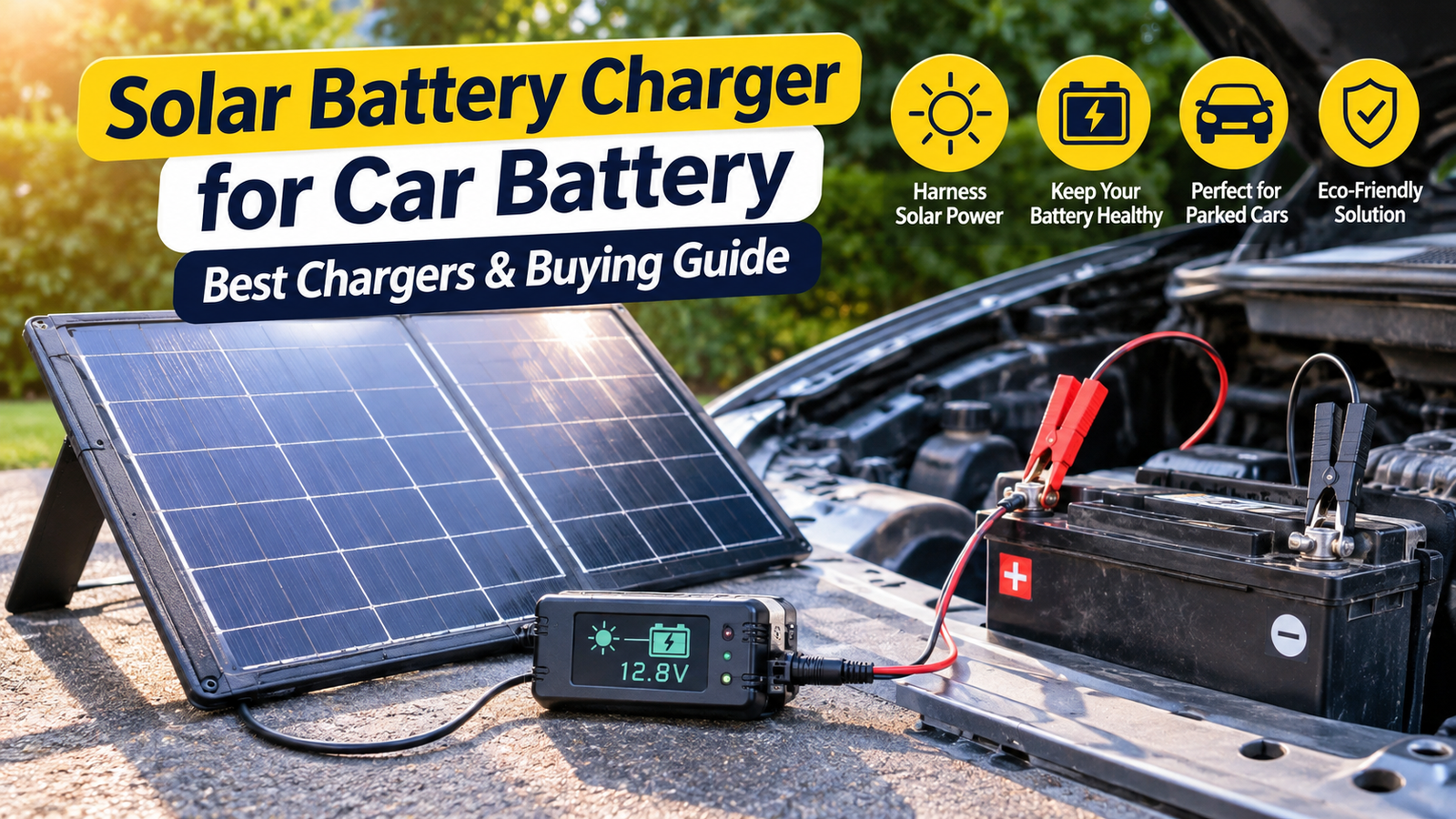
A solar battery charger for car battery can help maintain the battery by using sunlight to produce a small amount of electricity. Unlike a traditional mains charger, it does not need a permanent connection to the electricity supply.
But how do solar car battery chargers work? What size do you need? Can they charge a completely flat battery? And are they safe to leave connected?
This guide explains everything you need to know before choosing a solar battery charger for your car battery.
What Is a Solar Battery Charger for a Car Battery?
A solar battery charger is a small solar panel system designed to provide electricity to a vehicle battery.
The panel captures sunlight and converts it into electrical energy. Depending on the type of charger, the electricity is regulated before it reaches the battery.
Most car solar chargers are designed for 12V vehicle batteries and are particularly useful for maintaining the charge of cars that are parked for days or weeks.
The main purpose is usually not rapid charging. Instead, a solar charger can help replace some of the charge that a battery naturally loses while the car is not being used.
How Does a Solar Battery Charger Work?
The process is relatively simple:
- Solar panel captures sunlight – The panel converts sunlight into DC electricity.
- Power is regulated – A suitable controller manages the electrical output.
- Power reaches the battery – The charger sends an appropriate amount of energy to the vehicle battery.
- Battery charge is maintained – The solar charger can help offset gradual battery drain.
The amount of electricity produced depends on factors such as panel size, sunlight, weather and positioning.
For this reason, a solar charger works best when the panel has a clear view of the sky and receives plenty of daylight.
Are Solar Battery Chargers Worth It?
For the right situation, yes.
A solar battery charger can be particularly useful if your car regularly sits unused. Even when the engine is switched off, modern vehicles can use a small amount of electricity for alarms, electronics and other systems.
Over a long period, this can contribute to battery discharge.
A solar charger can help in situations such as:
- Cars parked for several weeks
- Classic or vintage cars
- Seasonal vehicles
- Motorhomes and caravans
- Cars stored during holidays
- Vehicles parked away from a mains electricity supply
The biggest advantage is convenience. Once correctly installed, the panel can continue producing energy whenever suitable sunlight is available.
What to Look for in a Solar Battery Charger
Not every solar charger is the same. Before buying one, consider the following features.
1. Solar Panel Wattage
Wattage indicates how much electrical power the panel can potentially produce under suitable conditions.
Small 5W or 10W panels are commonly aimed at battery maintenance, while larger panels can provide more power.
However, bigger is not automatically better. The charger should be suitable for your vehicle battery and intended use.
2. 12V Compatibility
Check that the charger is designed for your car’s battery voltage.
Many passenger vehicles use 12V batteries, but you should always check your vehicle and battery specifications before connecting a charger.
3. Charge Controller
A charge controller can help regulate the electricity going into the battery.
This is particularly important when you want a solar setup for longer-term battery maintenance rather than simply connecting a solar panel directly to a battery.
4. Overcharge Protection
Look for suitable protection against overcharging where applicable.
A quality charger should be designed for its intended battery type and use, with appropriate charging management.
5. Reverse Current Protection
Some solar chargers include protection to prevent current flowing back towards the panel when sunlight is unavailable.
This can be useful when the charger remains connected for extended periods.
6. Weather Resistance
If the solar panel will remain outside, weather resistance is important.
Look for a product designed to withstand outdoor conditions and follow the manufacturer’s installation instructions.
7. Cable and Connector Options
Check whether the charger comes with suitable connection options for your car.
Common connection methods can include battery clips, ring terminals or a suitable vehicle power socket, depending on the product.
What Size Solar Charger Do You Need?
There is no single wattage that is perfect for every car.
Your choice depends on the battery, how long the vehicle is parked, the amount of sunlight available and whether you want maintenance charging or more substantial charging.
| Solar Panel Size | Typical Use |
|---|---|
| 5W | Basic battery maintenance |
| 10W | Many parked cars |
| 20W | Higher maintenance requirements |
| 30W+ | Larger batteries and other applications |
These are general guidelines rather than fixed rules. Always check the charger’s specifications before purchasing.
Can a Solar Charger Charge a Completely Dead Car Battery?
This is one of the most important questions.
A small solar battery charger is generally not designed to quickly recharge a completely flat car battery.
Small solar maintainers are better suited to gradually replacing the energy lost from a battery while a vehicle is parked.
If your battery is completely dead, a dedicated mains battery charger, jump starter or other appropriate charging method may be more suitable.
Once the battery has been recovered, a solar maintainer can potentially help reduce future discharge when the vehicle is left unused.
Solar Battery Charger vs Mains Battery Charger
Both can charge or maintain a vehicle battery, but they are designed for different situations.
| Feature | Solar Charger | Mains Charger |
|---|---|---|
| Power source | Sunlight | Electricity supply |
| Best for | Battery maintenance | Charging and recovery |
| Portability | Usually high | Usually lower |
| Running electricity cost | Very low | Uses mains electricity |
| Weather dependent | Yes | No |
| Long-term outdoor use | Some models | Usually less convenient |
If your main goal is quickly charging a flat battery, a mains charger may be the better choice.
If your car sits outside or in storage for long periods and you want to reduce gradual battery discharge, a solar charger can be a convenient option.
Will a Solar Charger Work on Cloudy Days?
Yes, a solar panel can still produce electricity in cloudy conditions, but its output will normally be lower than in strong direct sunlight.
This means a solar battery charger can still be useful during periods of weaker sunlight, but charging performance will depend on the weather, panel size and installation position.
For the best performance, place the panel where it receives as much unobstructed daylight as possible.
Where Can You Use a Solar Car Battery Charger?
One of the biggest advantages of solar charging is flexibility.
Driveway
If your car is regularly parked outside, a solar panel can be positioned where it receives sunlight.
Car Storage
A solar charger can be useful for vehicles that remain parked for long periods.
Classic Cars
Classic cars that are driven occasionally can benefit from battery maintenance between trips.
Motorhomes and Caravans
Vehicles that remain unused for part of the year can also be suitable candidates for solar battery maintenance.
Long-Term Parking
If a vehicle is parked for several weeks, a suitable solar maintainer can help offset some battery drain.
How to Connect a Solar Battery Charger to a Car
Always follow the instructions supplied with your specific charger.
A typical setup involves:
Step 1: Position the solar panel
Place the panel where it can receive good sunlight.
Step 2: Check the battery and charger
Confirm that the charger is compatible with your vehicle battery.
Step 3: Connect the charger
Use the supplied connector, battery clips or another approved connection method.
Step 4: Check the indicator
If your charger has an LED or display, check that it is operating correctly.
Step 5: Monitor the setup
Make sure cables are secure and cannot become trapped, damaged or exposed to unnecessary heat.
Never connect a charger in a way that conflicts with the manufacturer’s instructions.
Solar Charger Safety Tips
Although solar chargers are relatively simple devices, correct installation is important.
Keep these tips in mind:
- Use a charger suitable for your battery type and voltage.
- Follow the manufacturer’s connection instructions.
- Do not use damaged cables or connectors.
- Keep connections clean and secure.
- Avoid placing cables where they can be crushed or damaged.
- Check the battery for visible damage or leakage.
- Keep the solar panel and connections protected from unsuitable conditions.
- Do not assume every solar panel can be connected directly to every battery.
- Stop using the charger if you notice overheating, damage or unusual behaviour.
If you are unsure about your vehicle’s battery or charging system, consult the vehicle or battery manufacturer’s guidance.
Solar Charger vs Direct Solar Panel Connection
It may be tempting to buy a small solar panel and connect it directly to a car battery.
However, a properly designed solar charger is generally the safer and more convenient approach because it is designed specifically for battery charging or maintenance.
The charging system should be appropriate for the battery’s voltage and chemistry, and any controller or protection features should be used as instructed by the manufacturer.
This is especially important if the system will remain connected for long periods.
How to Get Better Performance From a Solar Car Battery Charger
A few simple steps can improve the performance of your setup.
Keep the Panel Clean
Dust and dirt can reduce the amount of sunlight reaching the solar cells. Clean the panel according to the manufacturer’s instructions.
Choose a Good Location
Avoid placing the panel where it is permanently shaded by walls, trees or other objects.
Check the Connections
Loose or damaged connections can reduce performance and create safety problems.
Consider Seasonal Conditions
Winter usually means shorter daylight hours and weaker sunlight in many locations, so the charger may produce less energy.
Check the Battery
A solar charger cannot fix an old or damaged battery. If the battery repeatedly loses its charge despite regular use and maintenance, it may need testing or replacement.
Best Solar Battery Charger for Different Situations
The best option depends on what you are trying to achieve.
Frequently Asked Questions
Can a 10W solar panel charge a 12V car battery?
A 10W solar panel can provide energy to a compatible 12V battery, but the actual charging performance depends on sunlight, battery condition, panel efficiency and the charging system.
Will a solar charger work on cloudy days?
Yes, but its output is normally reduced when sunlight is weaker. The actual performance depends on the panel and weather conditions.
Can I leave a solar charger connected to my car battery?
Some solar battery maintainers are designed for extended connection, but you should only do this when the manufacturer specifically supports it and the charger is suitable for your battery.
Can a solar charger start a car?
A small solar battery maintainer is not normally designed to provide the high current needed to start a car immediately.
Is a solar battery charger worth buying?
If your car is regularly parked for long periods, a solar battery charger can be a useful way to help maintain the battery without relying on a mains electricity supply.
Final Thoughts
A solar battery charger for car battery can be a practical solution for vehicles that spend a lot of time parked.
It is particularly useful for classic cars, seasonal vehicles, caravans, motorhomes and cars that are not driven regularly.
The most important thing is choosing a charger that matches your battery and intended use. Pay attention to wattage, voltage compatibility, charge regulation, protection features and weather resistance.
Remember that a small solar maintainer is primarily a battery-maintenance solution rather than a replacement for a powerful charger when dealing with a completely flat battery.
Choose the right charger, position the panel correctly and follow the manufacturer’s instructions, and solar charging can make long-term vehicle battery maintenance much easier.