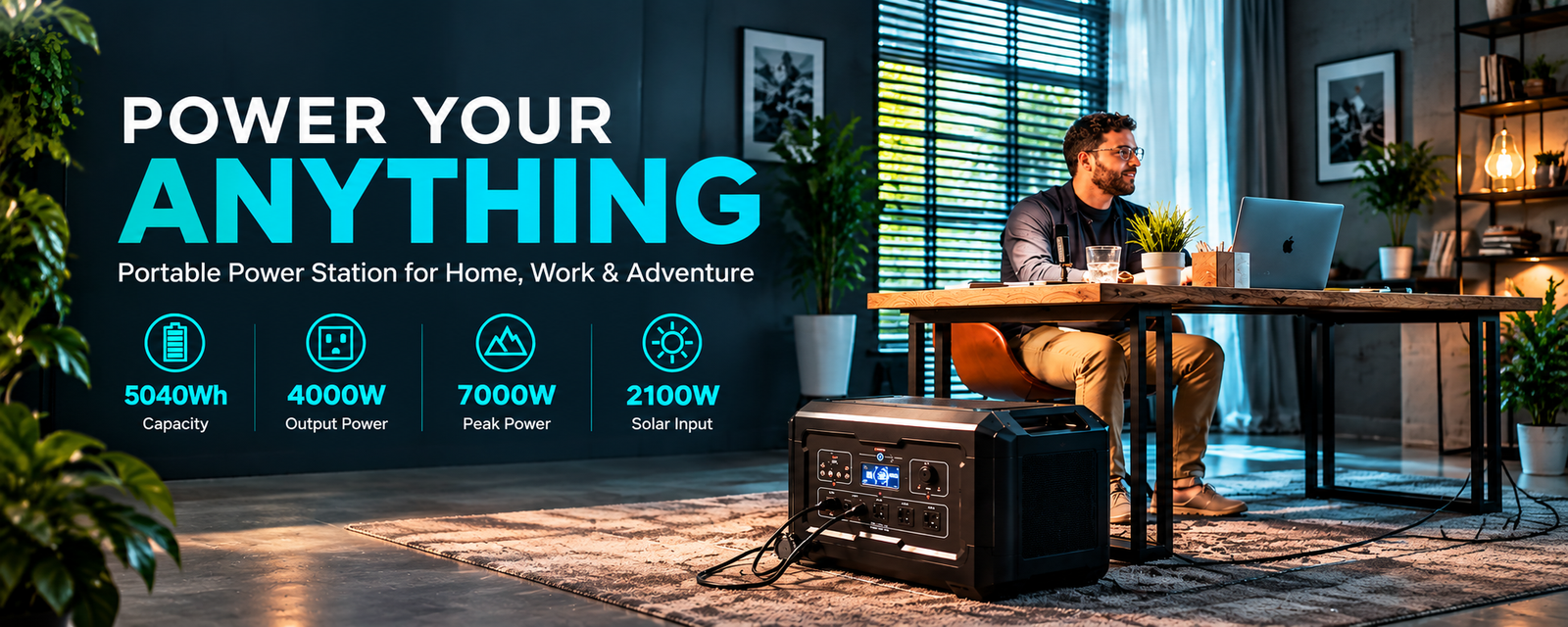
A solar generator can be an effective option for your home for numerous reasons including the fact that it makes sure that your home appliances will work during power outages and allow you to use Nature’s resources. But as the market is full of different models, you may probably find it impossible to make your choice easily.
In fact, the model you select will depend on your self-sufficient power usage requirements, solar charging capabilities, the capacity of batteries as well as your budget. Additionally, the climatic conditions in the chosen country and existing electric appliances are also important to take into account.
The article will provide you with helpful tips on picking out the best solar generator for your lifestyle.
1. Know Your Home’s Energy Requirements
When choosing a solar generator, it’s important to assess what devices you will be powering.Some houses require electricity only to charge phones, laptops, and lights, and for the internet but others may require back-up power for vital equipment like fridges or fans.
Check the wattage of the appliances and the number of hours of their expected usage per day. For instance, a 40-watt device that is run for 5 hours would consume 200 watt-hours.
Appliances with motors (e.g., refrigerators) will need more power when being turned on, and so your generator should be able to support both constant and temporary power load.
By assuming the list of appliances you plan on using with the generator, you will be able to select the right system for you instead of paying for a larger capacity.
2. Choose the Right Battery Capacity
The capacity of the battery is the amount of power your solar generator can hold for use later. Capacity is usually measured in watts per hour or kilowatts per hour.
While charging a few small devices and cell phones may be completed with the aid of a small battery, if you want to keep things running for a long time like a refrigerator or anything else of importance, a large battery becomes essential.
Consider how long you need the backup energy when there is no sun. On the other hand, systems that operate only from time to time are designed differently than those designed for multi-day blackouts.”The battery capacity is seldom equated to the energy that can actually be used.”There are inefficiencies involved in the process including inverter loss that will reduce the amount of electricity for usage last but not least making sure you are aware of the amount of power you actually want to have when it comes to your options.
3. Check the Efficiency and Charging Performance of Solar Panels
The solar panels are used to charge batteries through transforming solar energy into electrical energy. The effectiveness of the conversion of solar energy into electricity has an impact on how well the generator retrieves energy stored in batteries.
The availability of sunlight is different in various parts of Europe. For example, solar radiation in warm southern Italy is more intense than in Scandinavia, where long cloudy winters reduce energy yield.
When comparing different generators, examine the maximum solar charging input as well as the wattage of the panels that the generator can accommodate; in other words, the stronger a solar-charging capacity the generator has, the faster it gets recharged.
The placement of solar panels is a crucial factor too. To achieve efficiency, panels have to be installed on the roof or in the garden where sunlight can shine on them for most part of the day, being out of reach of winds and shades.
4. Power Output Compatibility with Appliances
The voltage capacity indicates the amount of energy that a power generator can hold. The power rating indicates the capacity of the generator to deliver power in a particular setting. A generator can have enough stored energy to power a refrigerator. However, it may not be able to generate enough energy that is necessary for the compressor to start up. This is why it is important to also look into the generator’s continuous output and surge capacity.
When powering several devices together, you should estimate the complete wattage you require to operate all of them and purchase your generator accordingly.
A suitable Solar Power Generator for Home should suit the power specifications of the appliances you have including the kind of charging methods available.
There are also the right number and types of connections necessary in the generator since having USB ports, AC outlets and DC links will ensure you do not need any additional accessories.
5. Take Into Account Voltage and Plug Regulations in Europe
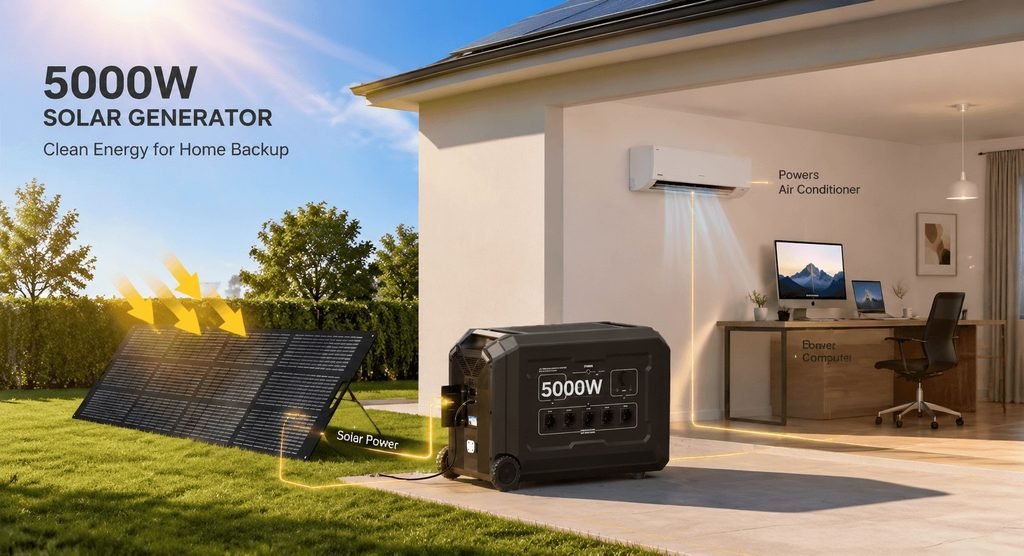
Electrical usability is another significant consideration in selecting an ideal solar generator for Europe.
Although the electricity voltage has been standardized to 230V across most of Europe, the frequency differs from country to country. Hence, it is very important to verify specifications before buying a generator to ensure compatibility with the purposes it is planned to be used for.
In case it is planned to connect the generator directly, it is necessary to ensure that compatible plugs are available.
When connecting portable electricity sources to the home’s power supply system, extra caution should be taken. Getting in contact with a qualified electrician is essential.
6. Comparison of Batteries by Lifetime
Choosing a battery for solar generators is important since it affects their life, weight, service, and cost.
The state-of-the-art mobile power stations commonly rely on lithium iron phosphate batteries as they have longer cycle life and stability at higher temperatures, given that the battery management system is appropriately applied.
Though it might be possible for lightweight and compact lithium batteries to exist on the market, it is important to analyze the specific details of battery production for quality evaluation.
Therefore, it is important to take such aspects into consideration as cycle life, temperature operational range, and availability of replacement batteries.
Although having a pretty high initial price, such a system still provides better performance due to longer service life and more reliable service.
7. Take into Account Necessary Safety Attributes
When acquiring electrical appliances in your residence, safety features must be taken into account foremost. The design of the electrical appliance must provide protection for it against short circuits, overheating, overcharging, and overloads.
One of the safety features you may find is the battery management system, which is used to monitor the operation of batteries.
Before buying any electrical equipment, it is important to check safety documentation and warranty conditions provided by the manufacturer, including the contact for customer service.
People living in Europe are also advised to look into conformity documentation and product specifications to check if the products comply with necessary standards.
Each generator has to be used in accordance with the instructions laid out by the manufacturer in terms of indoor or outdoor use, ventilation conditions, humidity conditions, and operational temperatures. Don’t assume that a generator is weatherproof just because it is not stated as such in the specifications.
Having acquisition of technical assistance is also extremely beneficial when it comes to installing, repairing, or claiming warranty on the product purchased.
8. Set a Realistic Budget
When looking for a generator, you have to think about its price. Although price is always a consideration, it’s important to keep in mind that the cost of the generator involves more than just the generator itself.
The price will also include all the necessary components of the solar-powered generator system, such as the solar panels, charging cables, and connector. This means that some generators may cost less at first, but if they do not come with additional equipment, their real cost may turn out to be higher.
Also, consider how often you will use the system. If you need a power station only to charge small electronics during a few outages, a large and costly system may not be necessary. Households with higher energy demands may do better with a system that has a greater solar input and battery capacity.
You can explore options at the Souopower and compare specifications to arrive at a solution that suits your household needs.
Final Thoughts
When you’re looking at buying a solar power generator for home use in Europe, your first step is to assess how much electricity you need.
Firstly determine your necessary daily energy consumption. Next, think about the capacity of the batteries, efficiency with which solar panels will charge them, inverter usage, compatibility with various devices and safety measures. Weather conditions and the cost must also be considered.
You shouldn’t go for the cheapest or largest battery option, but rather find a generator that will be able to supply energy to your essential appliances and charge effectively in your area.
Frequently Asked Questions
1. What size solar generator should one choose for a European home?
It is necessary to select the correct size based on the appliances which will be powered and how long backup power is needed in each case. There are smaller units for charging phones and running lights as well as laptops while larger systems that can operate home refrigerators or several other essential devices may be needed. Therefore, know your electricity needs before picking a solar power generator.
2. Can the solar generator be charged on cloudy days?
Of course, solar panels are able to produce electricity even when it is cloudy, but their performance level will still be lower than it is during sunny days. They can either be fitted with larger compatible solar panel systems or use other ways of charging batteries during limited sunshine.
3. Should you buy a solar power generator for residential use?
Investing in a solar generator can serve as an excellent way to get a source of power backup or produce electricity on the move. Whether such investment pays off depends on a number of factors including your energy consumption, your location and weather where you reside, how much you are willing to spend, as well as the frequency of use of the generator.